
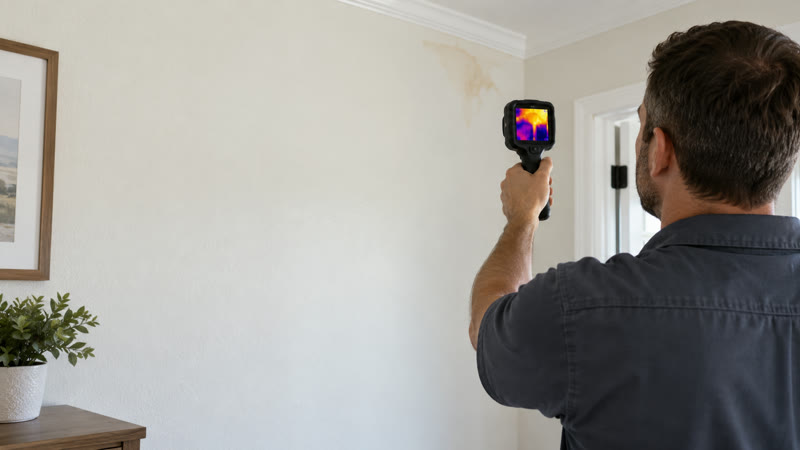
Thermal imaging observes the surface
An infrared camera records temperature differences. Moisture can affect that pattern, but the camera does not look through a wall or directly show water inside a pipe. Sun exposure, room conditions and other temperature influences matter. A colored image is an investigation lead rather than a confirmed repair location.
Ask which additional observation or moisture measurement corroborates the pattern. If the surface may be wet from rain, a household pipe or a nearby outdoor circuit, the assessment must distinguish those possibilities instead of assigning the source from color alone.
Acoustic listening investigates relevant line sound
Escaping water from a pressurized line can generate sound transmitted through the pipe and surrounding material. Pipe material, accessible contact points and background conditions affect interpretation. A loud observation and a visible mark may be in different places, so ask how the findings were connected.
The proposed acoustic scope should name the suspected circuit and assessed points. If another line or room was inaccessible, have that limitation recorded. A quiet or unclear reading is not a universal assurance that every section is sound. Our slab leak guide explains how source findings relate to floor access.
Pressure evidence needs a defined test section
A pressure-test result belongs to the section and conditions actually assessed. Ask what was isolated and how test equipment and temperature conditions were accounted for. Manufacturer instructions distinguish possible system leakage from test-pump issues; a result alone does not give the exact place to open a finish.
This is a question for the appropriate professional, not a home testing procedure. No pressure value or improvised isolation is recommended here. The useful report explains what the result establishes and what further evidence is needed to choose a repair point.
Ask for an explanation that survives the image
- Which water circuit and rooms were assessed?
- Which findings corroborate the suspected source?
- What was inaccessible or remained inconclusive?
- What further authorized access would change the conclusion?
- Which proposed repair follows those findings?
Keep the findings with the repair scope. If testing requires another unit or managed room in Pelican Bay, arrange the appropriate permission. For a stain without a confirmed source, the interior leak guide helps prepare the surface and timing record.
Questions before you call
Can a thermal camera locate water through concrete?
It records surface temperature patterns. Ask what corroborates moisture and links it to the suspected pipe before choosing access.
What if sound and visible moisture disagree?
Report both locations. The assessment should reconcile them or state that they may have different causes, rather than selecting the loudest point without explanation.
What should an inconclusive result include?
The assessed section, observations, access limits and remaining source question. That record helps define the next investigation without presenting uncertainty as a confirmed repair.