
A floor symptom and water use are separate clues
Damp flooring, unexplained metered use or a water sound can justify investigation. They do not locate a fault beneath the slab. An indoor fixture or outdoor circuit may account for water use while the floor has another moisture source. Note both observations rather than assuming they share a cause.
Have existing plumbing plans, earlier detection findings and any reroute record ready. A repair made years ago can change which line is still active; an apparent route on a drawing is useful context, not confirmation of its present condition.
What the test needs to establish
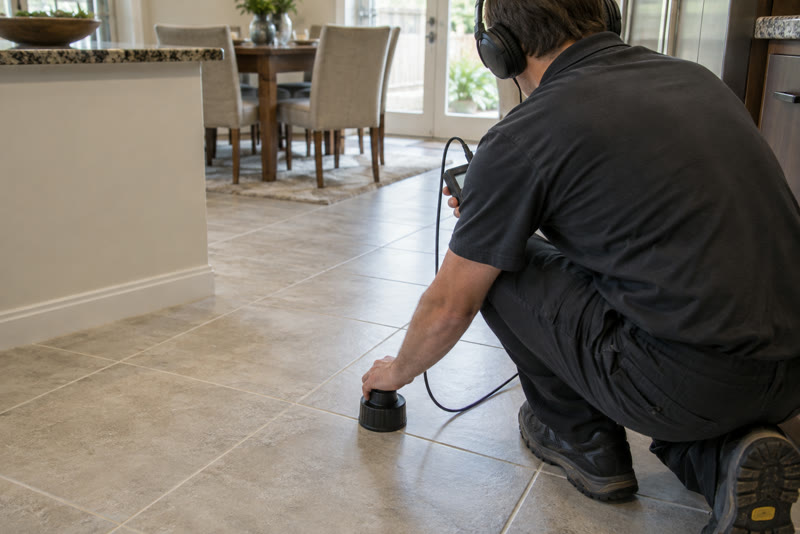
Ask which supply section is being assessed and what finding connects it to the affected floor. Acoustic listening can help narrow a pressurized leak under suitable conditions. A thermal pattern can guide moisture investigation, but it does not see a pipe through concrete. Our detection-method guide explains the distinction.
If pressure testing is proposed, ask which section was isolated and how equipment and test conditions were accounted for. A pressure result and an exact access location are different findings. Leave system isolation and pressurization to the appropriate professional; do not attach a test pump or open a floor to diagnose it yourself.
Compare the access and repair choices
A localized repair and a reroute address the pipe through different paths. Ask what evidence supports each proposed option, which existing section remains in use and where any new route would run. Retaining a finish can matter to the decision without guaranteeing that every repair can avoid an opening.
- Identify the proposed opening or route on a plan.
- Separate concrete access, pipe work and flooring reinstatement.
- Clarify permits and any shared-building approval.
- Ask how the repaired section will be checked before it is covered.
Make the scope usable after the floor is closed
Keep the source finding, approved route and repair record together. These help a later assessment distinguish the repaired section from another possible leak. If the source is still uncertain, the agreement should say what further investigation is needed instead of describing exploratory access as a confirmed completed repair.
For Old Naples, describe any retained finish that matters at your actual property. If the implicated section runs outside the foundation, compare the scope with main water line repair. Ask for detection, access and restoration items in the written quotation.
Questions before you call
Does a warm floor prove a hot-water leak?
A temperature difference is a lead, not source confirmation. Record its position and ordinary-use timing, then ask what corroborates moisture and links it to a line.
Can a reroute avoid opening every affected floor?
A different route may change access, but its suitability depends on the actual pipe and building. Ask which surfaces still need work and what approvals the proposal includes.
What if the test suggests a leak but cannot locate it?
Request the assessed section, evidence and limitation in writing. The next decision may be further investigation rather than authorizing an opening at the first visible mark.